

Every client asks at some point: “So how does it actually work behind the scenes?”
It’s a fair question. E-prescribing campaigns can appear straightforward from the outside, but there is a carefully structured process behind every nudge.
It starts with identifying the right patient cohort, continues with matching eligible patient records against defined clinical criteria, and ends with measuring what happens after the nudge is delivered.
Here’s how the process works.
The Trigger Mechanism: How a Nudge Is Activated
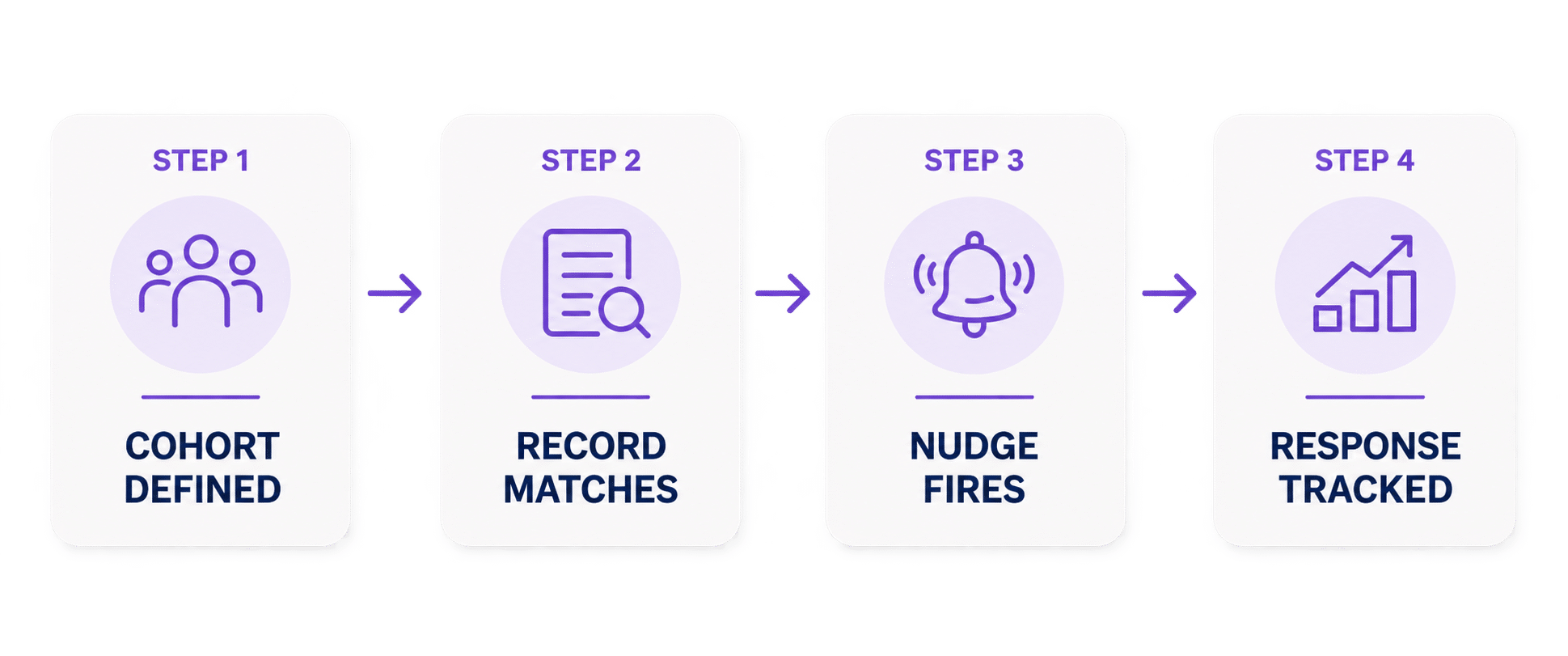
When we brief a project, one of the first steps is defining the clinical profile for the campaign.
This can include a combination of medicines, diagnoses, demographics, laboratory results and other relevant criteria that help identify the appropriate patient cohort.
From there, the platform does the work.
Every patient record moving through a participating GP or pharmacy workflow is checked against the campaign criteria. When there is a match, the nudge fires within the prescribing workflow.
The important distinction is that we never see or share the underlying patient record. The platform works with the clinical criteria only. When an eligible record matches, the trigger is activated and the patient’s information does not leave the practice.
In simple terms, the process looks like this:
Cohort Defined → Record Matches → Nudge Fires → Response Tracked
This creates a clean and measurable pathway from identifying the intended cohort through to understanding campaign response.
How Do We Determine the Potential Cohort Reach?
This is something we establish before a campaign begins.
Every campaign starts with a baseline report, which provides an assessment of the target cohort that can be reached through the prescribing platforms before a single nudge is delivered.
But reach isn’t simply about finding the largest possible audience.
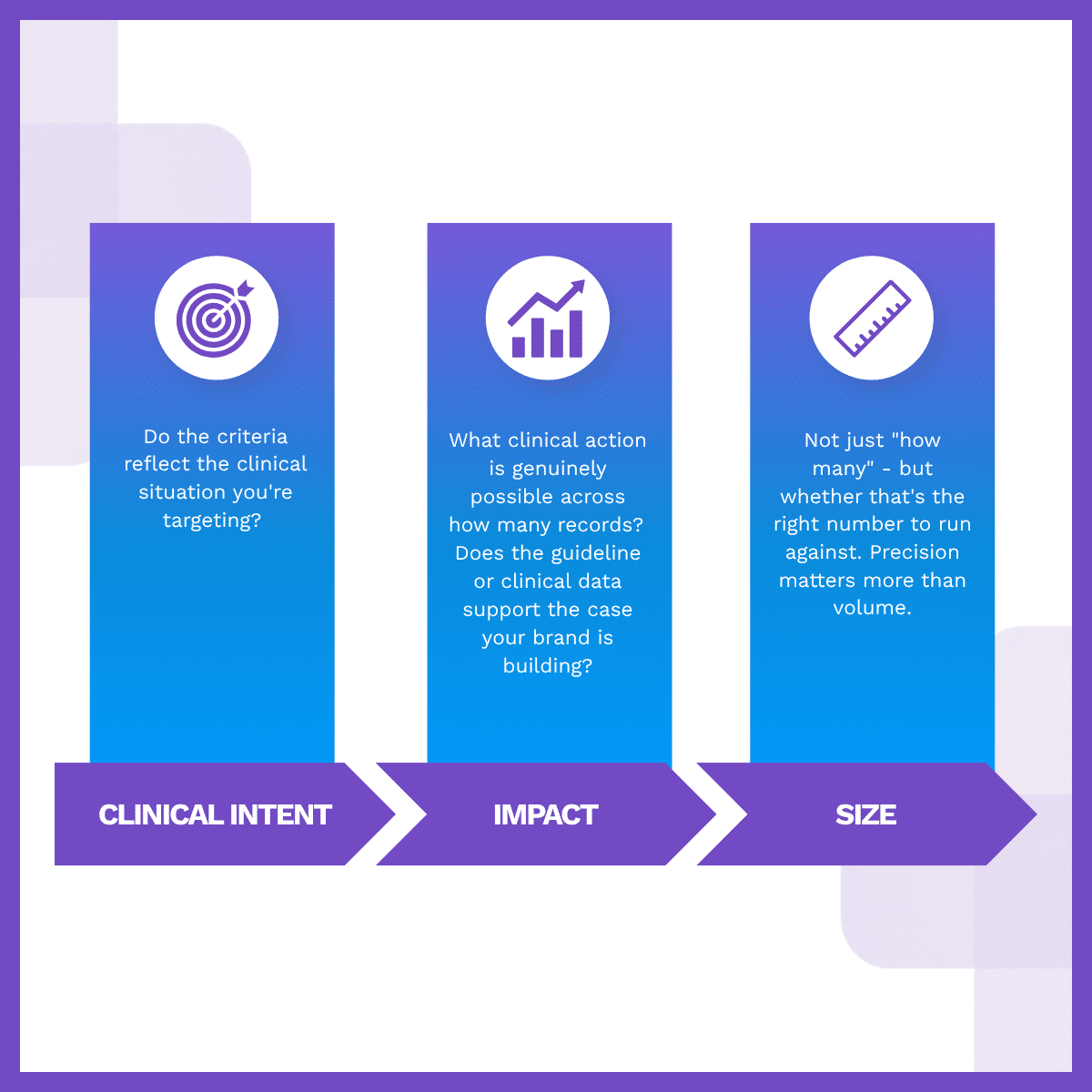
There are three important considerations:
Clinical intent: Do the campaign criteria reflect the clinical intention being targeted?
Impact: What clinical action is genuinely possible across the available records? Does the guideline or clinical data support the case being made?
Size: How many patients are potentially eligible, and is that number meaningful enough to generate measurable results?
Balancing these three factors helps create a cohort that is both clinically relevant and large enough to provide useful campaign data.
The Size Question: Bigger Isn’t Always Better
The instinct is often to go big.
But in practice, an extremely large cohort can create its own problems.
If the same prescriber encounters the same nudge across too many patient records within a short period, something that initially feels timely and clinically relevant can quickly become repetitive.
That can lead to nudge fatigue.
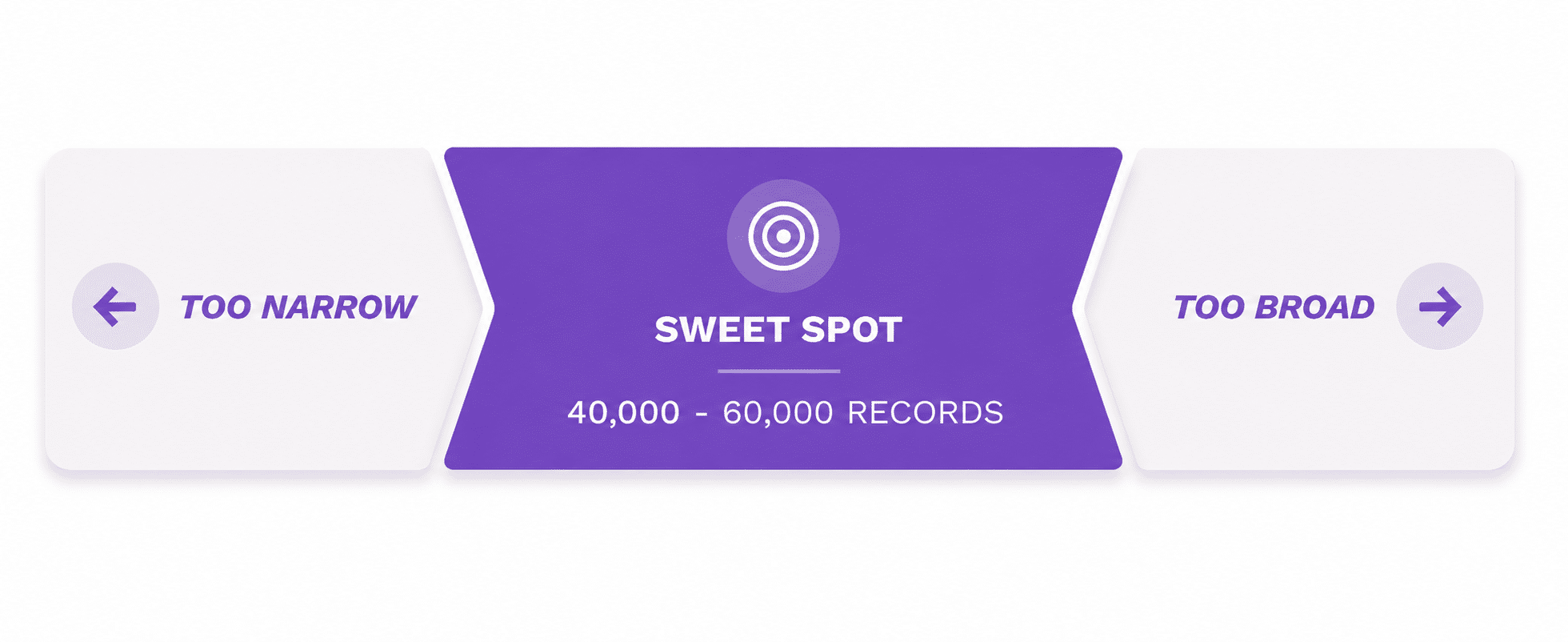
We typically find the ideal cohort sits within a more focused range rather than simply targeting as many records as possible.
The objective is to find the sweet spot: broad enough to generate meaningful results, but targeted enough to maintain clinical relevance.
Why Measurable Results Take Time
Another important consideration is timing.
Patients don’t necessarily move through the prescribing journey immediately. Depending on the medication and clinical pathway, patients may move through GP prescribing in three, six or twelve-month cycles.
That means a patient in the defined cohort today may not appear in the workflow until their next prescription or appointment.
The time between a nudge and a measurable action can also vary. For example, an opportunistic vaccination may produce a quicker conversion than a more complex chronic disease review.
For that reason, campaign performance shouldn’t be judged solely within a short two-month window.
Instead, we look at the prescribing trends across six, nine and twelve months to understand whether the campaign is creating a sustained effect.
That longer-term view gives a much clearer picture of impact.
From Clinical Criteria to Campaign Results
A successful e-prescribing campaign is not simply about delivering a message to the largest possible audience.
It requires the right balance between:
relevant clinical criteria, an appropriately sized cohort, a well-timed nudge and enough time to measure the resulting prescribing behaviour.
When those elements work together, e-prescribing nudges can provide a structured and measurable way to support clinical decision-making at the point of prescribing.
Understanding the Key Terms
Record
A patient record within the e-prescribing system that fits the campaign cohort. When it enters the workflow at a GP or pharmacy, it triggers the nudge. The underlying patient information is never seen or shared.
Nudge
A clinical prompt triggered when a matching record is present within the e-prescribing workflow. From that trigger, the prescribing response can be tracked.
Baseline Report
A bespoke project report covering the therapeutic area and relevant combinations of medicines, diagnoses, demographics or laboratory results. It establishes the baseline conditions the patient cohort must meet before the project begins.
Want to Understand the Potential Reach for Your Therapeutic Area?
If you’d like to see what a baseline report could look like for your therapeutic area, contact MediActivate and we can walk you through the potential cohort, campaign approach and data.